History of Lincoln
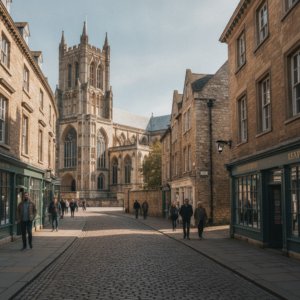
Lincoln is a city in England. It is the county town of Lincolnshire and the seat of the Diocese of Lincoln. The city lies on the River Witham, 100 miles (160 km) north of London and 16 miles (26 km) south of the Humber Estuary and has a population of 91,614 (2011 census).
The city was founded by the Romans in the 1st century AD and was known as Lindum Colonia. It was an important Roman settlement and was the site of a major battle in AD 633 between the Romans and the Angles. After the Romans left Britain, it was taken over by the Anglo-Saxons and became the capital of the Kingdom of Mercia.
In the 11th century, it was the site of the Battle of Lincoln, which was fought between King Stephen and Empress Matilda. The battle was a victory for Matilda and she became Queen of England. In the 12th century, Lincoln was granted a charter by King Henry II and became a major trading centre.
In the 16th century, it was the site of the Pilgrimage of Grace, a rebellion against King Henry VIII. The rebellion was defeated and Lincoln was sacked by the king’s forces. In the 17th century, it was the site of the Battle of Naseby, which was fought between the Royalists and the Parliamentarians. The battle was a victory for the Parliamentarians and led to the end of the English Civil War.
In the 18th and 19th centuries, it was a major centre of the woollen industry. The city was also home to a number of educational institutions, including the College and University. In the 20th century, it has continued to grow and develop and is now a major tourist destination.
Culture
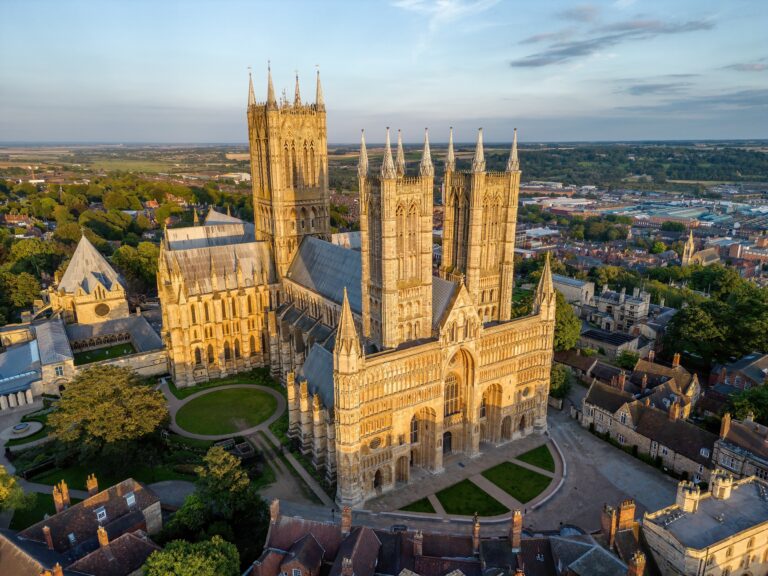
Our culture is a blend of traditional English and modern influences. The city has a rich history and is home to many historical buildings and landmarks. We are also a popular tourist destination, and there are many museums and art galleries to visit. The city has a vibrant arts scene, with a number of theatres, cinemas and music venues. It is also home to a number of universities and colleges, which contribute to the city’s intellectual and cultural life.
Economy
The economy is based on a number of sectors, including manufacturing, retail, and services. The city is home to a number of large employers, including the University, the Cathedral, and the Crown Court. The city is also a major centre for retail, with a number of shopping centres and high streets.
The economy has been growing steadily in recent years, with the city’s GDP increasing by an average of 2.5% per year between 2011 and 2018. The city’s unemployment rate is also below the national average, at 4.5% in 2018.
It is well-connected to the rest of the UK by road, rail, and air. The city is served by the M1 motorway, which connects it to London and other major cities in the UK. it also has a railway station that provides direct services to London, Birmingham, and other major cities. The city is also part of the East Midlands and so is served by the East Midlands Airport, which offers flights to a number of destinations in the UK and Europe.
It is a thriving city with a strong economy. The city is home to a number of large employers, and it is also a major centre for retail and services.
Education
Lincoln has a long history of education, dating back to the 11th century when the city was founded. The University was established in 1992 and is now one of the largest universities in the UK. The university offers a wide range of undergraduate and postgraduate degrees, as well as research opportunities. Other educational institutions include Lincoln College, Christ’s Hospital School, and the School of Art and Design.
Transportation
Lincoln is well connected to the rest of the UK by road, rail, and air. The city is located on the A1 road, which runs from London to Edinburgh. The M1 motorway also passes through Lincoln, providing a direct link to the Midlands and the North of England. Lincoln has two railway stations: Lincoln Central and Lincoln St. Mary’s.
Lincoln Central is the main station, and it offers services to London, Nottingham, Sheffield, and other major cities. Lincoln St. Mary’s is a smaller station, and it offers services to Skegness, Boston, and other local destinations. Lincoln being part of the East Midlands is also served by the East Midlands Airport. The airport offers flights to destinations in the UK, Europe, and the Middle East.
Notable People
The following is a list of notable people who were born or raised in Lincs:
- Richard III, King of England (1452-1485)
- Thomas Cranmer, Archbishop of Canterbury (1489-1556)
- William Cecil, 1st Baron Burghley (1520-1598)
- John Speed, cartographer (1552-1629)
- Oliver Cromwell, Lord Protector of England (1599-1658)
- Isaac Newton, mathematician and physicist (1643-1727)
- Charles Darwin, naturalist (1809-1882)
- Joseph Lister, 1st Baron Lister, surgeon (1827-1912)
- Winston Churchill, Prime Minister of the United Kingdom (1874-1965)
- Peter Hall, theatre director (1930-2017)
- David Hockney, painter (born 1937)
- Joan Bakewell, television presenter (born 1933)
- Gary Lineker, footballer (born 1960)
- Jade Thirlwall, singer (born 1992)